



Indian festive sweets like halwa, barfi, and ladoos often contain ingredients—including raisins, cocoa, artificial sugar substitutes, and high-fat dairy—that are toxic to dogs or cause severe gastrointestinal distress. During festivals like Diwali, Ganesh Chaturthi, or Holi, mithai boxes are passed around homes, increasing the risk of accidental ingestion from low coffee tables or dropped scraps.
Understanding which traditional ingredients present absolute toxicity versus those that cause severe digestive disruption allows pet parents to act immediately with emergency veterinary care when necessary, while managing mild dietary indiscretions with targeted digestive support.
High-Risk and Toxic Ingredients in Indian Festive Sweets

Raisins and Sultanas (Halwa, Kheer, Ladoo)
Raisins and sultanas are common garnishes in halwa, kheer, and various ladoos. In dogs, any amount of dried grapes can trigger acute kidney injury. The exact toxic mechanism remains unknown, meaning there is no established safe threshold based on body weight. A single raisin can prove toxic to a small dog, making any ingestion a veterinary emergency.
Cocoa and Chocolate (Fusion Mithai, Festive Gift Packs)
Modern Indian celebrations frequently feature chocolate-coated dry fruits or fusion mithai. Chocolate contains theobromine and caffeine, methylxanthines that dogs metabolize far slower than humans. Ingestion can cause vomiting, diarrhea, rapid heart rate, tremors, and severe systemic toxicity requiring immediate medical attention.
Artificial Sugar Substitutes (Sugar-Free Mithai)
Sugar-free sweets designed for human dietary management often rely on artificial sugar substitutes. In dogs, these compounds stimulate a rapid, massive release of insulin from the pancreas, resulting in severe hypoglycemia (dangerously low blood sugar) within 30 to 60 minutes, which can progress to liver failure.
Heavy Ghee, Mawa, and Condensed Milk (Besan Ladoo, Gulab Jamun)
Traditional sweets like besan ladoo, gulab jamun, and barfi are loaded with clarified butter (ghee), heavy cream (mawa), and condensed milk. While not inherently toxic like raisins, high-fat foods overload the canine digestive tract. Dogs lack the capacity to process large amounts of saturated fat, which can trigger acute gastroenteritis, painful bloating, severe diarrhea, and potentially life-threatening acute pancreatitis.
How Festive Dietary Indiscretions Affect Gut Microbiome Balance
When a dog ingests rich, fat-heavy, or sugary festive treats, the sudden arrival of unaccustomed nutrients disrupts the balance of the gut microbiome. The canine digestive system relies on specific colonies of beneficial bacteria in the small and large intestines to break down daily food. A sudden influx of refined sugar and heavy fats feeds opportunistic bacterial strains, leading to dysbiosis, gas accumulation, and loose stools.
Because over 70% of the immune system lives in the gut, maintaining microbial stability is critical for long-term health, especially during periods of dietary stress.
Quick-Reference Guide: Festive Sweets & Risk Levels
| Ingredient / Sweet | Risk Type | Primary Danger | Action Required |
|---|---|---|---|
| Raisins & Sultanas | Severe Toxicity | Acute kidney injury | Immediate emergency vet visit |
| Chocolate & Cocoa | Severe Toxicity | Theobromine poisoning | Immediate emergency vet visit |
| Artificial Sugar Substitutes | Severe Toxicity | Rapid hypoglycemia & liver damage | Immediate emergency vet visit |
| Ghee, Mawa & Fried Mithai | High Digestive Risk | Pancreatitis & severe diarrhea | Vet evaluation for acute symptoms |
Supporting Gut Recovery After Mild Indiscretions
If your dog consumes a known toxin, immediate emergency veterinary intervention is non-negotiable. However, if your pet suffers from mild digestive upset after consuming non-toxic table scraps—such as a bite of plain festive bread or small amounts of plain rice—once cleared of acute danger by a veterinarian, targeted digestive supplementation helps restore balance.
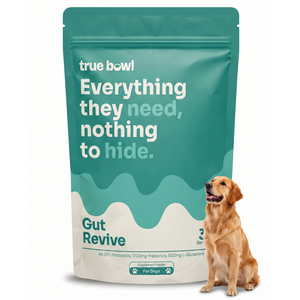
Formulated to restore microbial balance and ease digestive strain, True Bowl Gut Revive delivers comprehensive multi-mechanism support through exact, disclosed dosages:
- 13-Strain Probiotic Blend (4B CFU per 8 g scoop): Delivers live beneficial bacteria across both the small intestine (Lactobacillus strains) and large intestine (Bifidobacterium strains) to rebuild healthy gut flora.
- Triple Prebiotic Matrix: Combines 1,000 mg FOS (Fructooligosaccharides), 600 mg GOS (Galactooligosaccharides), and 100 mg Inulin per 8 g scoop to nourish beneficial bacteria and establish a stable microbiome.
- Targeted Digestive Enzymes: Provides 1,000 IU Amylase, 1,000 IU Lipase, and 1,000 IU Protease per 8 g scoop to actively assist in breaking down carbohydrates, fats, and proteins.
- Gut Wall & Stool Support: Contains 500 mg L-Glutamine per 8 g scoop to support gut wall structural integrity, paired with 800 mg Pumpkin Powder to absorb excess moisture and firm loose stools.
- Natural Carminatives: Includes 300 mg Papaya Powder, 80 mg Fennel Seeds, 80 mg Ajwain Seeds, and 40 mg Ginger per 8 g scoop to help relieve gas, bloating, and mild nausea naturally.
FAQ
What should I do if my dog eats a sweet containing raisins?
Treat any ingestion of raisins or sultanas as an immediate veterinary emergency, regardless of the amount eaten or your dog's size. Do not wait for symptoms to appear, as kidney damage can begin before outward signs occur. Contact your emergency vet clinic right away.
Are milk-based Indian sweets like rasgulla or paneer barfi safe for dogs?
No. Adult dogs lack sufficient lactase enzymes to digest concentrated dairy products like mawa, condensed milk, or heavy paneer. Consuming milk-based sweets typically results in painful gas, abdominal cramps, and diarrhea.
How can I protect my dog during festive gatherings at home?
Keep all mithai boxes on elevated, closed surfaces, inform guests not to feed scraps to your dog, and prepare dog-safe treats in advance so your pet can participate safely without risking digestive distress.