



Over 70% of your dog’s immune system is located directly inside the gastrointestinal tract. A specialized layer of tissue called Gut-Associated Lymphoid Tissue (GALT), embedded within the intestinal lining, acts as the primary command center for canine immune defense.
The gut microbiome—trillions of live microorganisms inhabiting the digestive tract—continuously interacts with GALT. Beneficial bacteria train immune cells to differentiate between harmless dietary proteins and actual pathogens, preventing inappropriate inflammatory responses while maintaining rapid defense mechanisms against real infections.
When the microbial population in the gut becomes unbalanced—a state known as dysbiosis—systemic immune communication suffers. Maintaining optimal immune health in dogs requires looking beyond general wellness claims and addressing the specific biological mechanisms that connect digestive health to immune resistance.
The Biological Link: How the Microbiome Trains Canine Immune Cells

The canine gastrointestinal tract is lined with a delicate layer of epithelial cells held together by tight junctions. Just beneath this layer lies the GALT, which houses immune cells including lymphocytes, macrophages, and plasma cells.
Beneficial bacteria colonizing the gut mucus layer perform three distinct functions to protect system immunity:
- Pathogen Exclusion: Friendly bacteria physically occupy binding sites along the gut lining, blocking opportunistic pathogens from colonizing intestinal tissue.
- Short-Chain Fatty Acid (SCFA) Production: Beneficial microbes ferment non-digestible prebiotic fibers into SCFAs like butyrate. Butyrate serves as the primary energy source for intestinal epithelial cells, reinforcing tight junctions and preventing unabsorbed compound leakage into the bloodstream.
- Immune System Priming: Microbes interact directly with cell receptors inside GALT, stimulating the production of Secretory Immunoglobulin A (sIgA)—an antibody that neutralizes foreign invaders on mucosal surfaces before they reach systemic circulation.
If dysbiosis occurs, gut lining permeability increases and pathogenic organisms flourish, forcing the immune system into a state of chronic, low-grade activity.
Why Urban Indian Home Diets Often Require Gut Support
In urban Indian households, home-prepared meals frequently consist of boiled chicken, rice, roti, pumpkin, and curd. While palatable, these staples create distinct digestive challenges for dogs:
- Lack of Diverse Prebiotic Fibers: Diets heavy in cooked white rice and wheat flour supply simple starches but lack specialized fermentable fibers like fructooligosaccharides (FOS), galactooligosaccharides (GOS), and inulin needed to feed beneficial colonizing bacteria.
- Curd Myth vs. Reality: While plain curd contains live cultures, traditional home curd lacks the specific species, strain diversity, and high colony count required to pass safely through stomach acid and colonize the canine lower intestine.
- Carbohydrate Stress: Diets disproportionately high in simple carbohydrates can encourage microbial shifts in the small intestine, leading to variable stool quality and inconsistent nutrient absorption.
When dietary gaps alter gut flora, supplementing with an intentional combination of probiotics, prebiotics, and digestive enzymes helps restore baseline microbiome function.
A Three-Tiered Approach to Digestive and Immune Health
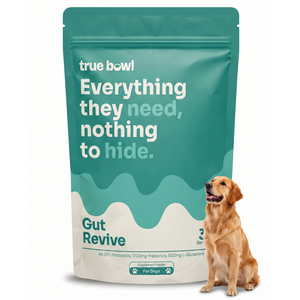
Effective gut support requires addressing active digestion, microbial repopulation, and structural lining maintenance simultaneously. Formulations like True Bowl Gut Revive combine 13 confirmed probiotic strains with prebiotics, digestive enzymes, and tissue-supportive compounds at explicit, quantitative dosages.
| Ingredient Category | Actives in Gut Revive (per 8 g scoop) | Primary Biological Mechanism |
|---|---|---|
| Live Probiotic Strains | 13 multi-region strains (4B CFU total) | Colonizes small and large intestines to displace pathogens and produce anti-microbial compounds. |
| Prebiotic Fiber Complex | FOS (1,000 mg), GOS (600 mg), Inulin (100 mg), Pumpkin Powder (800 mg) | Feeds beneficial bacteria; produces short-chain fatty acids (SCFAs) for gut lining health. |
| Digestive Enzymes | Amylase (1,000 IU), Lipase (1,000 IU), Protease (1,000 IU), Papaya Powder (300 mg) | Breaks down starches, fats, and proteins to prevent unabsorbed food fermentation. |
| Gut Lining Support | L-Glutamine (500 mg) | Amino acid that acts as a structural building block for intestinal cell repair and barrier integrity. |
| Botanical Carminatives | Fennel Seeds (80 mg), Ajwain Seeds (80 mg), Ginger (40 mg) | Relieves trapped gas, eases nausea via 5-HT3 receptor modulation, and aids smooth peristalsis. |
A single-mechanism product—such as a standalone probiotic—struggles to perform if the gut environment lacks the prebiotics needed to sustain live strains, or if incomplete digestion allows heavy starches to ferment inappropriately in the bowel.
Daily Dosing Protocol by Dog Size
Probiotic and digestive actives must be administered proportional to your dog's size to ensure therapeutic numbers reach the lower gastrointestinal tract. Gut Revive is formulated as a powder designed to be mixed directly into your dog's daily meal once per day.
| Dog Weight | Daily Scoop Dose | Total Powder Weight | Active Serving |
|---|---|---|---|
| Under 10 kg | ½ scoop | 4 g | Half standard scoop |
| 10–20 kg | 1 scoop | 8 g | 1 full scoop (4 Billion CFU) |
| 20–30 kg | 2 scoops | 16 g | 2 full scoops (8 Billion CFU) |
| Over 30 kg | 3 scoops | 24 g | 3 full scoops (12B CFU) |
Because live probiotic strains require consistency to maintain stable gut colonization, daily administration alongside balanced nutrition yields the most dependable long-term outcomes.
FAQ
How do probiotics directly support my dog's immune system?
Probiotics occupy receptor sites on the intestinal wall, preventing harmful pathogens from attaching. They also release compounds that signal Gut-Associated Lymphoid Tissue (GALT)—where over 70% of immune cells live—to produce protective mucosal antibodies like Secretory Immunoglobulin A (sIgA).
Why aren't digestive enzymes alone enough for gut health?
Digestive enzymes (such as amylase, lipase, and protease) break down food particles into absorbable nutrients, reducing digestive strain. However, enzymes do not repopulate beneficial bacteria or repair the gut lining. A complete strategy requires probiotics to restore flora balance, prebiotics to feed them, and compounds like L-Glutamine to support structural barrier health.
Can I give True Bowl Gut Revive alongside home-cooked meals like rice and chicken?
Yes. Home-cooked diets often lack fermentable prebiotic fibers like FOS and GOS. Mixing Gut Revive directly into home-prepared food provides the exact digestive enzymes and fiber complexes needed to assist nutrient breakdown and sustain healthy microbial balance.
Related reading