

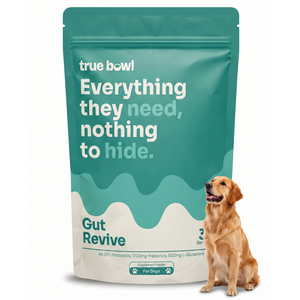
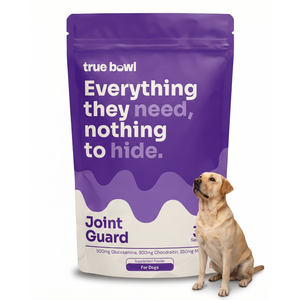


The Difference Between Listing an Ingredient and Dosing It

A therapeutic dose of glucosamine for dogs is the minimum quantity needed by body weight to actively support joint cartilage health—typically 500 mg daily for a medium-sized dog (10–20 kg). If a supplement provides significantly less than this threshold, it fails to deliver functional benefit regardless of what the front of the packaging promises.
In the pet supplement market, many joint products list glucosamine on their ingredient label, but conceal the actual amount behind "proprietary blends" or deliver trace amounts that fall far short of clinically studied levels. This practice allows products to claim joint support on the label while delivering doses too low to make a practical difference in a dog's joint tissue.
Understanding exact milligram requirements allows pet parents to evaluate labels objectively. When joint supplements disclose precise doses aligned with weight-based clinical standards, you can be confident your dog is getting meaningful daily support.
What Clinical Literature Recommends for Canine Joints
Veterinary studies establish clear daily milligram ranges for active joint compounds based on a dog's weight. For a medium dog weighing approximately 15 kg, the therapeutic range for Glucosamine HCl sits between 500 mg and 750 mg per day. Providing lower quantities fails to maintain the structural building blocks required for healthy cartilage matrix maintenance.
To ensure your dog receives a functional intake, daily dosing must scale accurately with body weight. A single fixed dose across all dog sizes either under-doses large dogs or over-delivers for toy breeds.
The standard scoop protocol for Joint Guard maps directly to these clinical target ranges across different weight bands:
| Dog Weight Band | Daily Scoop Dose | Glucosamine HCl Delivered | Clinical Target Range (~15 kg ref) |
|---|---|---|---|
| Under 10 kg | ½ scoop (2.5 g) | 250 mg | 250–350 mg |
| 10–20 kg | 1 scoop (5.0 g) | 500 mg | 500–750 mg |
| 20–30 kg | 2 scoops (10.0 g) | 1,000 mg | 1,000–1,250 mg |
| Over 30 kg | 3 scoops (15.0 g) | 1,500 mg | 1,500–2,000 mg |
When reviewing joint supplements, verify that the listed glucosamine form is Glucosamine HCl rather than unrefined raw extracts, and check that the stated milligram count meets these body-weight thresholds per daily serving.
Why Glucosamine Alone Is Not Enough
Cartilage support is only one aspect of canine joint care. Complete joint support requires addressing three distinct physiological mechanisms simultaneously:
- Structural Repair: Restoring raw cartilage components (Glucosamine, Chondroitin, Type II Collagen).
- Anti-Inflammatory Action: Modulating inflammatory pathways to reduce daily tissue wear (MSM, Green-Lipped Mussel, Boswellia, Curcumin).
- Joint Lubrication: Maintaining viscous synovial fluid within the joint capsule (Sodium Hyaluronate).
Most conventional joint formulations include only two active ingredients—typically glucosamine and chondroitin. While structural building blocks are necessary, they leave inflammatory pathways and joint fluid viscosity unaddressed.
To address all three mechanisms, Joint Guard incorporates 9 active ingredients in every 5 g scoop, with each active dosed at functional levels:
- Glucosamine HCl (500 mg): Provides key structural components for cartilage matrix support.
- Green-Lipped Mussel (400 mg): Contains ETA (eicosatetraenoic acid), an omega-3 fatty acid unique to marine tissue that supports joint comfort.
- MSM (350 mg): Donates biological sulphur to support connective tissue and manage oxidative stress.
- Chondroitin Sulphate (300 mg): Works synergistically with glucosamine to help cartilage retain fluid and elasticity.
- Boswellia Serrata (150 mg): Offers targeted botanical support for natural inflammatory responses via the 5-LOX pathway.
- Curcumin 95% + Piperine (60 mg): Delivers concentrated curcuminoids (raw turmeric powder contains only ~3% curcumin) paired with piperine to ensure absorption.
- Collagen Peptide Type II (50 mg): Supplies targeted amino acid structures essential for joint cartilage integrity.
- Sodium Hyaluronate (45 mg): Supports synovial fluid thickness and joint lubrication.
- Manganese Proteinate (10%): Provides 10 mg of trace mineral cofactors required for endogenous collagen synthesis.
Starting Preventive Joint Care Early
Waiting until a dog shows visible joint stiffness means cartilage loss and joint changes are already underway. Modern veterinary consensus emphasizes preventive joint supplementation before structural wear accelerates—particularly for large or genetically predisposed breeds.
Breeds like Labradors, Golden Retrievers, German Shepherds, and Rottweilers face a 60% to 80% lifetime risk of developmental joint issues such as hip or elbow dysplasia. Introducing a fully dosed daily joint formula from 12 months of age helps maintain healthy cartilage structure and joint fluid through their most active years.
At True Bowl, we believe in straightforward formulation. Feed Honestly.
How to Verify Your Dog's Joint Supplement
When choosing a joint formula for your dog, keep these three label rules in mind:
- Demand explicit milligram numbers: Avoid products using terms like "Joint Health Blend" without listing the exact milligram weight for each active ingredient.
- Check weight-based dosing: Confirm that the daily serving scales upward as your dog's weight increases so larger dogs receive functional quantities.
- Look for multi-pathway coverage: Ensure the formula provides anti-inflammatory actives and joint fluid support alongside structural glucosamine.
FAQ
How much glucosamine does a 15 kg dog need per day?
A 15 kg medium dog requires a therapeutic dose of 500 mg to 750 mg of Glucosamine HCl daily. Doses below this range fail to deliver functional amounts to joint tissues.
Is glucosamine safe to give every day?
Yes. Glucosamine HCl is a natural building block of joint cartilage and is formulated for daily, long-term administration mixed directly into your dog's regular meals.
What is the difference between raw turmeric and 95% curcumin extract?
Raw turmeric powder contains only about 3% active curcumin, meaning a dog would need to consume large, unpalatable amounts to receive a functional dose. Concentrated 95% curcumin extract combined with piperine ensures high bioavailability at a manageable serving size.
Related reading