


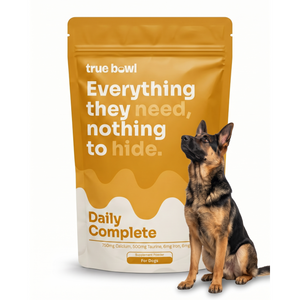
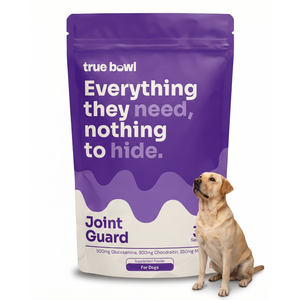


Joint supplements for Indian dogs are most effective when introduced before visible stiffness appears and when formulated at active, functional dosages rather than minimal label amounts. Most urban Indian dogs live in homes with polished marble, granite, or vitrified tiles, which lack natural traction and increase mechanical stress on their joints. Combined with widespread underdosing in commercial pet supplements, many dogs receive only a fraction of the active ingredients needed to maintain mobility.
Understanding how indoor environments, breed size, and specific milligram counts impact canine skeletal health allows pet parents to choose joint support that delivers real results. Here is what science and real-world Indian home environments reveal about protecting your dog's hips and elbows.
Why Marble and Tile Floors Accelerate Canine Joint Wear

Polished marble, granite, and vitrified tiles create a continuous physical challenge for dogs because smooth surfaces offer zero grip for canine paws. Every time a dog stands up, turns quickly, or trots across an Indian apartment floor, their paws experience micro-slips. To stay upright, the dog must continuously micro-adjust using stabilizing muscles, placing lateral shear stress on the hips, elbows, and stifle joints.
Over time, these micro-slips accumulate into joint fatigue. Unlike natural outdoor surfaces like soil or grass where claws dig in to distribute weight, hard indoor floors act as an unyielding impact zone. Large breed dogs such as Golden Retrievers, Labradors, and German Shepherds are particularly susceptible, often showing early joint stress between 18 and 24 months of age due to body weight combined with slippery surfaces.
Adding area rugs in high-traffic areas helps reduce mechanical stress, but physical environment changes are only half the equation. Internal nutritional support is equally critical to maintain joint cartilage resilience against daily friction.
The Label Illusion: Why Most Joint Supplements Underdose
Many commercial joint supplements sold in India list beneficial ingredients on the front label while delivering amounts far too small to yield physical results. This industry practice—often called "label dressing"—allows products to claim ingredients like Glucosamine, Chondroitin, or MSM while keeping production costs low.
For a joint supplement to maintain cartilage structure and fluid mobility, active ingredients must reach specific functional thresholds inside the body. A 30kg Labrador cannot achieve joint support from a chew containing only trace amounts of Glucosamine when nutritional science indicates a daily requirement of 1,000mg of Glucosamine HCI for a large-breed dog.
To evaluate whether a product offers real utility, pet parents must examine the guaranteed analysis panel on the back of the package and calculate the active milligrams per serving relative to their dog's weight.
Key Joint Ingredients: Required Dosages vs Typical Market Offerings
Evaluating joint support requires looking beyond ingredient names to exact dosages and mechanisms of action. Active joint compounds work synergistically to support synovial fluid viscosity, protect cartilage, and maintain healthy inflammatory responses.
Glucosamine HCI
Glucosamine is an amino sugar that serves as a building block for glycosaminoglycans, the structural components of cartilage. It helps maintain cartilage integrity under mechanical stress.
- Required functional dosage (25–40kg dog): 1,000mg daily.
- Typical market product dosage: Sub-functional trace amounts.
Chondroitin Sulfate
Chondroitin works alongside Glucosamine to absorb shock and retain water within articular cartilage, helping joint tissue remain resilient under pressure.
- Required functional dosage (25–40kg dog): 500mg daily.
- Typical market product dosage: Sub-functional trace amounts or omitted.
MSM (Methylsulfonylmethane)
MSM is a bioavailable sulfur compound necessary for collagen synthesis and tissue elasticity. It supports healthy connective tissue and normal recovery after exercise.
- Required functional dosage (25–40kg dog): 600mg daily.
- Typical market product dosage: Sub-functional trace amounts or omitted.
Green-Lipped Mussel (Perna canaliculus)
Rich in Eicosatetraenoic Acid (ETA)—a rare omega-3 fatty acid—Green-Lipped Mussel supports joint comfort and healthy inflammatory responses in joint tissues.
- Required functional dosage (25–40kg dog): 650mg daily.
- Typical market product dosage: Included in undisclosed proprietary blends or omitted.
Boswellia Serrata
A traditional botanical native to India, Boswellia serrata contains boswellic acids that support healthy joint pathways without gastric irritation.
- Required functional dosage (25–40kg dog): 150mg daily.
- Typical market product dosage: Sub-functional trace amounts or absent.
Comparing Joint Support: Dosage Standards
The following table contrasts dosage requirements for a 25–40kg dog against standard market offerings and True Bowl's formulation approach.
| Ingredient / Factor | Clinical Requirement (25–40kg Dog) | Typical Market Product | True Bowl Joint Guard |
|---|---|---|---|
| Glucosamine HCI | 1,000mg | Sub-functional / trace | 1,000mg |
| Chondroitin Sulfate | 500mg | Sub-functional / trace | 500mg |
| MSM | 600mg | Sub-functional / trace | 600mg |
| Green-Lipped Mussel | 650mg | Undisclosed / trace | 650mg |
| Boswellia Serrata | 150mg | Sub-functional / trace | 150mg |
| Dosage Transparency | Clear mg per serving | Proprietary blends / hidden | Full milligram disclosure |
Note: Always review the active ingredient panel based on your dog's body weight to ensure proper daily intake.
When to Start Joint Support for Indian Dogs
Starting joint support early is significantly more effective than attempting to manage joint stiffness later in life. Because cartilage has limited blood supply, maintaining existing cartilage structure is far easier than rebuilding damaged tissue.
- Large Breeds (25kg+): Begin daily joint support around 12 to 18 months of age, particularly if living in homes with smooth tile or marble floors.
- Medium Breeds (12–25kg): Introduce joint support by age 3 to 4 to protect against long-term wear from jumping on furniture or stairs.
- Small Breeds (Under 12kg): While carrying less body weight, small dogs frequently jump off beds and sofas onto slick floors; start support around age 4 to 5.
Formulations like Joint Guard are designed to deliver these precise, functional dosages without unnecessary fillers, providing urban Indian dogs with the structural joint protection their environment demands. Feed Honestly.
FAQ
At what age should Indian dogs start taking joint supplements?
Large breed dogs in Indian homes should start joint supplements between 12 and 18 months of age to protect against early joint wear caused by slick indoor surfaces. Medium and small dogs generally benefit from starting joint support between 3 and 5 years of age.
Why do slick tile and marble floors hurt my dog's joints?
Slick tile and marble floors lack traction, forcing dogs to make continuous micro-adjustments using their joints and stabilizer muscles to maintain balance. Over time, these micro-slips create lateral strain on hip and elbow cartilage, accelerating wear.
How can I tell if a joint supplement has enough active ingredients?
Check the active ingredient list on the back of the package for specific milligram amounts rather than generic percentages or proprietary blends. A 25–40kg dog typically requires 1,000mg of Glucosamine HCI and 500mg of Chondroitin Sulfate daily to experience real structural benefit.