

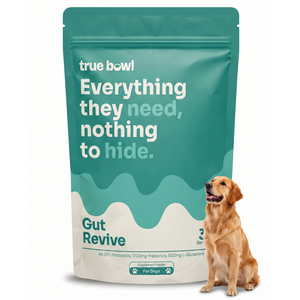
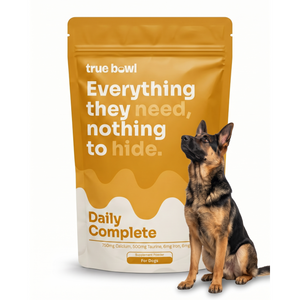
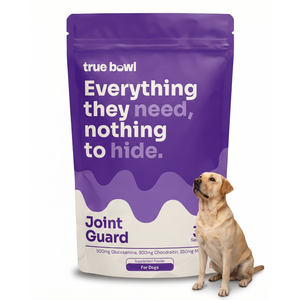


Rubber jaw syndrome in dogs is a severe condition where the bones of the skull and mandible lose their structural density, becoming soft and pliable. It is the visual result of metabolic bone disease—specifically nutritional secondary hyperparathyroidism—which develops when a dog's daily food fails to deliver adequate bioavailable calcium or presents an inverted calcium-to-phosphorus ratio.
Because calcium is critical for cardiac regulation, muscle contraction, and nerve transmission, a dog's body treats blood calcium levels as a life-or-death priority. When dietary calcium is missing or blocked, the parathyroid gland secretes parathyroid hormone to extract calcium directly from the dog's skeleton to keep blood levels stable. The bones of the jaw and face are often among the first to yield their minerals, leading to softening, loose teeth, jaw pain, and difficulty chewing.
In Indian homes, this condition is almost always linked to unsupplemented home-cooked meals built around plain meat, rice, and roti. Understanding how calcium and phosphorus interact—and how to correct dietary gaps—is essential to protecting your dog's skeleton.
The Mechanism Behind Rubber Jaw: Calcium-Phosphorus Inversion

Dogs do not require calcium in isolation; they require calcium and phosphorus delivered in a precise physiological balance. According to established veterinary standards, adult dogs need a calcium-to-phosphorus (Ca:P) ratio between 1:1 and 1.4:1. When dietary minerals fall within this window, bones retain their density and strength.
When a home diet relies heavily on muscle meat or grain without a raw bone or mineral source, that ratio flips inverted. Plain chicken breast, for instance, carries a Ca:P ratio of approximately 1:16—delivering sixteen times more phosphorus than calcium.
Research into canine home feeding shows that 94% of home-prepared dog diets are nutritionally incomplete, with calcium being missing or severely deficient in 84% of recipes. Feeding an unsupplemented meat-and-rice meal continuously stimulates the parathyroid gland. Over months, elevated parathyroid hormone steadily strips calcium from bone tissue, progressively softening the jaw and mandible.
Why Common Home Foods Do Not Close the Calcium Gap
Pet parents frequently assume that adding an extra egg or a spoon of curd to home-cooked food solves the calcium deficit. However, common human food additions fail to provide the absolute amounts of calcium required by a dog's metabolic system.
For example, adding one boiled egg to a bowl provides roughly 27 mg of calcium. For an adult dog weighing 15 kg requiring an NRC recommended allowance of 750 mg of daily calcium, an egg leaves a deficit of over 660 mg every single day. Dairy additions like paneer or curd do deliver calcium, but they also bring substantial amounts of natural phosphorus, doing little to fix an inverted Ca:P ratio.
| Nutrient | NRC Daily Requirement (15 kg Dog) | Typical Indian Home Diet Delivers | Daily Gap |
|---|---|---|---|
| Calcium | 750 mg | ~62 mg | −688 mg |
| Phosphorus | Balanced to Ca (1:1 to 1.4:1) | Excessively high (e.g., 1:16 in chicken) | Inverted ratio |
| Vitamin D3 | 102 IU | ~3 IU | −99 IU |
| Zinc | 11.3 mg | ~4.5 mg (before phytate blocking) | −6.8 mg |
Without measured mineral balancing, feeding a home-cooked diet creates chronic mineral deficits that force the body to draw from its own bones.
How True Bowl Daily Complete Restores Mineral Balance
Restoring healthy mineral balance requires adding precise, disclosed amounts of calcium without oversupplying phosphorus.
Formulated specifically to bridge the nutritional gaps of Indian home diets, True Bowl Daily Complete provides 750 mg of elemental calcium per 5 g scoop. To actively fix the inverted mineral ratios found in meat-and-rice meals, phosphorus is kept minimal at just 16 mcg per scoop, ensuring the calcium works to balance the phosphorus already present in the food.
Daily Complete uses a straightforward, scoop-based protocol tied to your dog's weight:
| Dog Weight | Daily Dose | Powder Weight | Calcium Provided |
|---|---|---|---|
| Less than 10 kg | ½ scoop | 2.5 g | 375 mg |
| 10–20 kg | 1 scoop | 5 g | 750 mg |
| 20–30 kg | 2 scoops | 10 g | 1,500 mg |
| Over 30 kg | 3 scoops | 15 g | 2,250 mg |
Safety Restraint: Daily Complete is formulated strictly for adult dogs. Do not feed Daily Complete to puppies under 12 months (or large breed puppies under 18 months), as excess calcium during growth phases can cause severe skeletal deformities.
FAQ
Can rubber jaw syndrome in dogs be reversed with diet?
Nutritional secondary hyperparathyroidism can be managed and halted by restoring a proper dietary calcium-to-phosphorus ratio under veterinary supervision. While bone density can improve once mineral intake is normalized, severe physical jaw deformities may require specialized medical evaluation.
Does feeding boiled eggs supply enough calcium for dogs?
No. One boiled egg yields approximately 27 mg of calcium, which fills less than 4% of a 15 kg dog's daily requirement of 750 mg. Relying on eggs alone leaves a major mineral deficit.
Why is phosphorus kept so low in True Bowl Daily Complete?
Indian home diets based on chicken, mutton, rice, or roti already contain high amounts of natural phosphorus. Adding extra phosphorus in a supplement would worsen the dietary inversion. Daily Complete delivers 750 mg of calcium alongside just 16 mcg of phosphorus per 5 g scoop to restore proper balance.
Related reading