



No, chicken and rice is not enough for a dog as a daily, long-term diet. While plain boiled chicken and white rice serves as an effective, highly digestible short-term meal for recovering from a digestive upset, using it as a permanent daily feed leads to severe nutritional deficiencies over time.
Studies show that roughly 94% of home-prepared dog diets are nutritionally incomplete when measured against National Research Council (NRC) standards. Chicken breast provides lean protein and white rice supplies readily accessible carbohydrates, but together they lack essential minerals, fat-soluble vitamins, trace elements, and essential amino acids required for canine maintenance.
Understanding why chicken and rice falls short—and how to bridge these specific micro-nutrient gaps—ensures your dog receives complete daily nutrition without sacrificing the benefits of fresh food.
Why Vets Recommend Chicken and Rice (And Why It Is Only Temporary)

Veterinarians frequently recommend a chicken and rice diet when a dog experiences acute diarrhea, vomiting, or gastrointestinal recovery. White rice is low in fiber and easily broken down, while boiled chicken breast delivers lean, easily assimilated protein without excess fat that could irritate the pancreas or intestinal lining.
However, this recommendation is strictly therapeutic and short-term—typically intended for 3 to 5 days until bowel movements normalize. It is designed to rest the digestive tract, not to sustain muscle mass, joint cartilage, immune function, or bone density over months and years.
Feeding plain chicken and rice indefinitely removes the gastrointestinal stress of complex foods, but it creates a quiet, progressive deficit in foundational nutrients.
The Hidden Micronutrient Gaps in Chicken and Rice
When a dog transitions from a short-term recovery diet to eating chicken and rice as a staple meal, several biological systems are put under strain due to specific nutrient deficits.
1. The Calcium-to-Phosphorus Inversion
Dogs require a balanced calcium-to-phosphorus ratio between 1:1 and 1.4:1 to maintain skeletal structure and cellular function. Meat is naturally high in phosphorus and extremely low in calcium. Plain chicken breast carries a calcium-to-phosphorus ratio of roughly 1:16.
When a dog eats chicken and rice without added calcium, the diet provides roughly 62 mg of calcium daily for a medium 15 kg dog—far below the NRC recommended allowance of 750 mg. To keep blood calcium at physiological levels, the body undergoes nutritional secondary hyperparathyroidism, actively leaching calcium from the dog's bones to compensate for the dietary deficit.
2. Missing Trace Minerals and Phytate Blocking
Trace minerals like zinc and iron are critical for skin barrier integrity, thyroid health, and red blood cell production. A typical chicken and rice meal for a 15 kg dog provides roughly 4.5 mg of zinc, well below the required 11.3 mg.
Furthermore, carbohydrates like rice and roti contain phytates—compounds that bind to minerals in the digestive tract and reduce usable zinc absorption by an additional 30% to 50%.
3. Missing Fat-Soluble Vitamins and Taurine
Boiled chicken breast and white rice contain almost no fat-soluble vitamins or specialized cardiac compounds:
- Vitamin D3: Provides roughly 3 IU daily against a required 102 IU. Dogs cannot synthesize Vitamin D from sunlight and must receive it entirely through diet.
- Vitamin A: Provides roughly 80 IU against a required 284 IU, affecting vision and cellular repair.
- Taurine: Delivers only around 40 mg against a recommended baseline of 250 mg for a medium dog, putting long-term cardiac health at risk.
Why Adding an Egg Does Not Close the Gap
A common practice among pet parents is topping a chicken and rice bowl with a boiled egg to add extra nutrition. While eggs are an excellent source of digestible protein, they do not resolve the underlying micronutrient shortfall.
| Nutrient | Daily Requirement (15 kg dog) | Added by 1 Boiled Egg | Gap Remaining |
|---|---|---|---|
| Calcium | 750 mg | ~27 mg | −661 mg short |
| Taurine | ~250 mg | ~10 mg | −200 mg short |
| Vitamin D3 | 102 IU | ~44 IU | −55 IU short |
| Zinc | 11.3 mg | ~0.6 mg | Phytates still block absorption |
As the numbers show, relying on eggs alone leaves the calcium deficit almost entirely unaddressed while doing little to offset phytate mineral binding.
Quantitative Comparison: Plain Chicken & Rice vs. Required Baselines
The table below illustrates the exact daily gap experienced by a medium-sized adult dog (15 kg reference weight) eating plain chicken and rice without fortification.
| Nutrient | NRC Daily Requirement | Plain Chicken & Rice Delivers | True Bowl Daily Complete (1 Scoop) |
|---|---|---|---|
| Calcium | 750 mg | ~62 mg | 750 mg |
| Taurine | ~250 mg | ~40 mg | 500 mg |
| Zinc | 11.3 mg | ~4.5 mg | 6 mg |
| Iron | 13.5 mg | ~1.2 mg | 6 mg |
| Vitamin A | 284 IU | ~80 IU | 1,500 IU |
| Vitamin D3 | 102 IU | ~3 IU | 112 IU |
How to Correctly Balance Home-Cooked Dog Meals
If your dog prefers fresh home-cooked food over dry commercial kibble, you do not need to abandon home cooking. Instead, the meal must be systematically balanced with precise micronutrients.
Because home diets naturally supply excess phosphorus through meat, adding a standard multi-vitamin that contains phosphorus only worsens the mineral inversion. Bone meal or calcium-focused fortification is required.
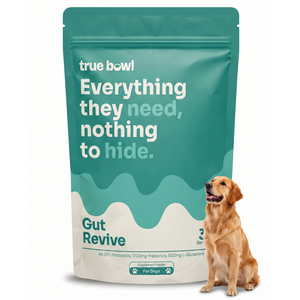
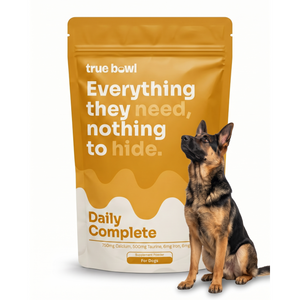
True Bowl Daily Complete is formulated specifically for Indian home diets. One 5 g scoop added once daily to a 10–20 kg dog's meal delivers 750 mg of Calcium, 500 mg of Taurine, 6 mg of Zinc, 6 mg of Iron, 1,500 IU of Vitamin A, and 112 IU of Vitamin D3—alongside a complete essential amino acid profile. It raises calcium and essential micro-nutrients without adding phosphorus, balancing the exact gaps present in chicken, rice, and roti-based meals.
FAQ
How long can a dog safely stay on plain chicken and rice?
A dog can safely stay on a plain, unfortified chicken and rice diet for 3 to 7 days during acute recovery from diarrhea or vomiting. Beyond one week, unsupplemented feeding begins to drain stored mineral reserves.
Can I balance chicken and rice by adding vegetables like carrots and spinach?
Vegetables add valuable dietary fiber and trace antioxidants, but they do not contain enough bioavailable calcium, Vitamin D3, or zinc to balance the diet. Furthermore, oxalates in greens like spinach can bind to calcium, making it even less available to the body.
What are the early signs of nutritional deficiency in dogs fed home diets?
Early indicators include a dull or dry coat, excessive shedding, flaky skin, low energy levels, and soft stool quality. Skeletal issues from calcium depletion develop slowly over months and may not show clear symptoms until bone density is impacted.
Related reading
- The Calcium Phosphorus Ratio in Dog Food Explained
- What Is Rubber Jaw Syndrome in Dogs? Causes and Prevention
- Calcium Deficiency in Indian Dogs: Causes, Risks, and Solutions