



Zinc deficiency in Indian dogs is primarily caused by home-cooked diets heavy in rice and roti, where natural phytates bind to minerals and leave up to 75% of home-fed pets short on essential zinc. While home meals made with chicken, rice, vegetables, and paneer are prepared with care, they rarely provide the exact trace mineral balances a dog's body needs to maintain healthy skin, coat, and cellular function.
Research shows that 94% of home-prepared dog diets in India are nutritionally incomplete when measured against National Research Council (NRC) standards. Zinc is one of the most consistently missing micronutrients. Left unaddressed, a chronic shortfall impairs skin barrier integrity, leads to dull or thinning fur, and slows down normal tissue recovery.
Understanding how staple Indian ingredients interact with mineral absorption allows pet parents to bridge this gap cleanly without overhauling their dog's daily feeding routine.
Why Home Diets in India Leave a 6.8 mg Zinc Gap

A healthy medium-sized adult dog weighing 15 kg requires approximately 11.3 mg of zinc per day to maintain basic physiological function. However, dietary analysis of typical home-prepared Indian dog food reveals that average daily servings deliver only about 4.5 mg of zinc—creating an immediate baseline gap of 6.8 mg every day.
The problem is compounded by how plant-based staples behave in the canine digestive tract. Grains like wheat (roti) and rice contain phytates—natural compounds that bind to metal ions in the intestine. When a dog consumes meals rich in rice or roti, these phytates lock onto zinc molecules and prevent them from passing through the gut wall into the bloodstream.
As a result, actual absorbed zinc can drop by an additional 30% to 50% below the total amount present in the food bowl. Pet parents often try to fix dietary shortfalls by adding a boiled egg to the bowl, but a single boiled egg contributes only around 0.6 mg of zinc. While eggs offer quality protein, they do not provide enough elemental zinc to close the 6.8 mg threshold or overcome phytate interference.
Spotting the Daily Signs of Low Zinc Absorption
Zinc plays an essential role in protein synthesis, immune cell function, and skin cell turnover. Because a dog's skin and coat undergo continuous renewal, the epidermal barrier is often the first system to show signs of dietary zinc insufficiency.
Pet parents should watch for these early indicators of poor zinc status:
- Dull, brittle, or thinning coat: Hair follicles lack the trace minerals required for structural strength and shine.
- Flaky or dry skin: Reduced skin barrier efficiency leads to moisture loss and localized scaling.
- Cracked paw pads: Slowed cellular turnover prevents pad tissue from repairing daily wear and tear.
- Delayed recovery from minor scrapes: Connective tissue repair slows down when zinc availability is low.
Certain breeds—including German Shepherds, Siberian Huskies, and Alaskan Malamutes—have higher baseline risks for zinc absorption challenges. For these breeds, as well as everyday urban pets on home-cooked meals, consistent daily intake of elemental zinc is critical for long-term health.
Comparing Diet Intake vs. Recommended Zinc Levels
To see how home meals compare against recognized nutritional targets, review the daily zinc intake figures for a 15 kg medium dog below:
| Dietary Source / Standard | Daily Zinc Delivered | Absorption Efficiency | Meets 11.3 mg Daily Target? |
|---|---|---|---|
| NRC Recommended Allowance (15 kg dog) | 11.3 mg | Standard baseline | Target standard |
| Typical Indian Home Diet | ~4.5 mg | Reduced 30–50% by phytates | No (Leaves a 6.8 mg gap) |
| Home Diet + 1 Boiled Egg | ~5.1 mg | Reduced 30–50% by phytates | No (Leaves a 6.2 mg gap) |
| True Bowl Daily Complete (1 scoop / 5 g) | 6 mg elemental zinc | Unbound elemental mineral | Yes (Fills the home diet gap) |
How Daily Complete Fills the Mineral Gap
Bridging a daily mineral shortfall does not require switching away from fresh home food. It requires targeted nutritional balancing with exact, disclosed dosages.
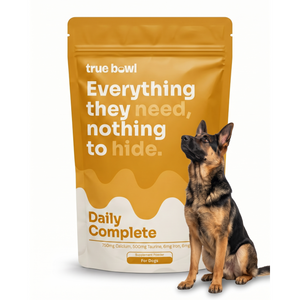
True Bowl Daily Complete is formulated to deliver 6 mg of elemental zinc per standard 5 g scoop, directly filling the 6.8 mg deficit common in Indian home diets. Because the formula supplies elemental zinc without unnecessary filler grains, the mineral is delivered in an unbound form that avoids the phytate-blocking effects of rice and wheat.
In addition to zinc, each 5 g scoop provides 750 mg of calcium to correct the inverted calcium-to-phosphorus ratio of home food, 500 mg of taurine to support cardiac function, and a full essential amino acid profile. You can review all batch testing and verified dosages directly on The Proof.
Daily Dosing Protocol by Weight
Daily Complete comes as an unflavoured powder that mixes seamlessly into warm food once per day:
- Dogs under 10 kg: ½ scoop (2.5 g powder)
- Dogs 10–20 kg: 1 scoop (5 g powder)
- Dogs 20–30 kg: 2 scoops (10 g powder)
- Dogs over 30 kg: 3 scoops (15 g powder)
Note: Daily Complete is intended for adult dogs over 12 months of age. Puppies under 12 months should not receive calcium-supplemented powders due to developmental bone growth requirements.
FAQ
Why does rice or roti in my dog's food block zinc absorption?
Grains contain natural plant compounds called phytates. In the dog's digestive tract, phytates bind to zinc minerals and form insoluble complexes, reducing intestinal zinc absorption by 30% to 50%.
Can I fix my dog's zinc gap by adding extra eggs or chicken?
While meat and eggs provide valuable protein, they do not deliver concentrated elemental zinc. One boiled egg adds only about 0.6 mg of zinc, which remains subject to phytate binding from the rest of the meal.
Is True Bowl Daily Complete a chew or a powder?
Daily Complete is a pure powder. Powders allow for precise, scoop-based dosing that mixes easily into fresh home-cooked meals without added sugars, binders, or heat processing.
Related reading
- Home-Cooked Dog Food Missing Nutrients: The Hidden Gaps Explained
- Is Chicken and Rice Enough for Dogs Long-Term?
- The Calcium Phosphorus Ratio in Dog Food Explained